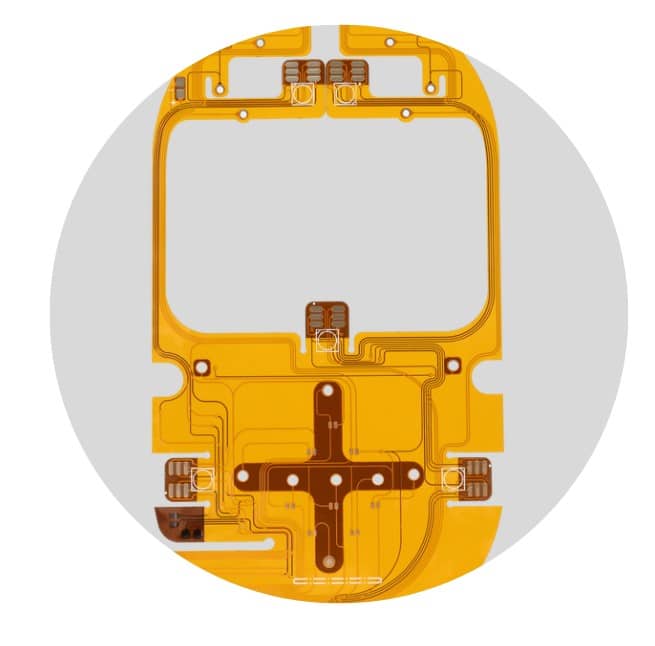
Flex PCB Home / PCB Solutions / Flex PCB Flexible Circuits Flex PCB Flex PCB manufacturing for thin, lightweight, compact products that need bendable interconnects, space savings, and fast-turn prototype support. Request Quote View Capabilities Engineering-led PCB and PCBA support RCT Advantage Flexible PCB benefits. Flex circuits help electronics teams solve packaging, weight, and movement challenges. Thin and lightweight Useful for compact products, modules, and wearable electronics. Dynamic bending Support applications where movement or folding is part of the design. Space savings Reduce cable assemblies and fit complex mechanical envelopes. Fast-turn prototypes Validate flex geometry and routing before scaling. Capability Snapshot Technical details for sourcing review. Use this as a starting point for engineering discussion. Final capability depends on design data and manufacturing review. Board type Single-sided, double-sided, multilayer flex by review Materials Polyimide and flexible substrate options Applications Display, sensor, wearable, BMS, compact modules Assembly Flex PCB assembly available RCT Advantage Common applications. RCT supports flex PCB programs for displays, sensors, EV BMS, compact modules, and connected devices. OLED displays Flexible interconnects for display and module assemblies. Battery systems Compact routing for EV BMS and power electronics. Wearables Thin circuits for space-constrained products. Flex assembly Flex PCB assembly support for prototype and low-volume builds. FAQ Buyer questions, answered clearly Can RCT support quick-turn PCB and assembly together? Yes. RCT can coordinate fabrication, BOM review, component sourcing, SMT/THT assembly, inspection, and delivery for prototype and low-volume projects. What files should I send for a quote? Gerber ZIP, drill files, stackup notes, drawings, BOM, pick-and-place data, and any special test or lead-time requirements are helpful. Does RCT provide DFM support? Yes. The team can review manufacturability risks, stackup concerns, assembly constraints, and practical production notes before build. Request Flex PCB support. Send your files and schedule target. RCT will review manufacturability, quote requirements, and the best route forward. Request Quote